Wednesday, 7 December 2011

Chapter 8

Chapter 8 Assessment

a) The issue here is that Quebec wants to separate from Canada, and that the Liberal Party of Canada voted to separate from the country, and be recognised as a separate nation. Prime Minister Stephen Harper states that the true intention of the Bloc Quebecois leader is to recognise what the sovereigntists would like the Quebecois to be, and not what they are. He says that the French Canadians are already a nation, but to them being a nation means separating. He believes that the Quebecois are a nation united within Canada. The Assembly of First Nations Chief Phil Fontaine compares the First Nations to the Quebecois in that they are both their own unique nations, and they have a special place in this country. He says that the rights and status of the First Nations remain the same within the country, and continue to practise their traditional values and beliefs. Finally, President of the Meits National Council says that the building and upholding strong diversity within Canada helps to strengthen our bonds. He also says that all of our rights are protected within the constitution, and diversity within a country is important.
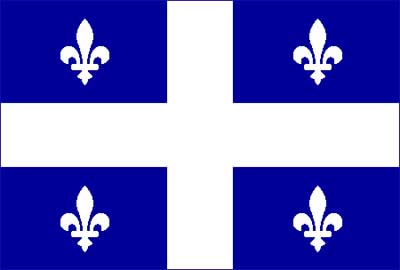
b)I do not believe that Quebec should be considered it's own nation. I believe that the Quebecois are a nation in themselves, but Quebec does not need to be a separate nation to be considered as one.

Canada is a very large, and very diverse country. There are many different cultural groups, and many people of different races religions, and people from all over the world living here. That is one of the main key aspects to what Canada is. Canada is a multicultural nation, and that helps to strengthen our bonds and sense of togetherness as a country. French is Canada's second official language, and if Quebec became it's own nation, with the majority of French Canadians going with it, would that still be the case? The First Nations, Metis, and French Canadians all make up what Canada is as a country, and without them, we would be losing a big part of who we are.

Canada is a bilingual country. Although Quebec is the biggest French speaking province, there are still other French Canadians living elsewhere in the country. These people may have big ties to the province of Quebec, and it may be a part of their nationalism. Removing this part of the country may be very upsetting and devastating the the Francophones living outside of Quebec, and I think that is something many Quebecois forget to realise. Canada itself is a French speaking country, and there are many bilingual people throughout the entire nation, not just in Quebec.

I believe that the Quebecois are already a nation within Canada, and they do not need to be a separate nation state to prove this. They have their own language, and special culture, which is affirmed and promoted all over the country. They in themselves are their own nation, and they add to the culture and diversity of Canada. They do not need to be a separate nation, because they are already a nation within the country.

c) The definition of Canada's Diversity relates to self - determination in that many of these diverse nations within Canada, may at some point want to be self determined. Although many of them such as the First Nations are a self - determined nation, not all of them are. Not all nations within the country have the right to choose their own government or control their own affairs. Many nations within the country may want that at some point in time or another, and that could end up causing conflict.

Friday, 11 November 2011

Chapter 5

National Interests

National Interests - the interest of a people of a nation (economic prosperity, security, safety, beliefs values)
Peacekeepers - armed forces who maintain peace by keeping enemies apart until a crisis can be resolved
Peacemaking - allowing forces that were originally sent to maintain peace in a region of conflict to use force for reasons other than self defence
Policy - plan of action that has been deliberately chosen to guide or influence future decisions
Foreign Policy - plan of action that guides a governments decisions about it's official relations than other countries
Domestic Policy - plan of action that guides a government's decisions about what to do within a country
GDP - value of all goods and services produces in one country in a year

Wednesday, 19 October 2011

Chapter 4

How Have People Reconciled Nationalist and Non-Nationalist Loyalties

Everyone's identity includes individual and collective loyalties. Some of these loyalties are nationalist loyalties, and others are non-nationalist. Non-nationalist loyalties are those that are not embedded in the idea of nation. For example, loyalty to your family or a sports team, is an example of a non-nationalist loyalty. However the divide between nationalist, and non-nationalist loyalties is not always clear. Some of the friends you have you many have chosen because of a similar taste in music, or you have a similar sense of humour. Others you may have chosen because of a similar sense of belonging to nation. Sometimes the divide between national and non-national loyalties is hard to determine. Here are some examples of non-nationalist loyalties.
Religion, Class, Region, Ideology, Cultural, Racial and Ethnic.

Often, non-nationalist loyalties contend with the idea of nationalist loyalties, or even other nationalist loyalties that people may have. This happens for many reasons, one of them being that these loyalties have different goals. When this happens, people work through it by developing different ways to reconcile these loyalties. They may for example
  • choose to live with these contending loyalties
  • choose one loyalty over another
  • accommodate their non-nationalist loyalties
Living With Contending Loyalties
People who choose to live with their contending loyalties may choose to remain uninvolved for a number of reasons. They may,
  • be undecided on how to resolve their contending loyalties
  • believe that they cannot make a difference
  • be occupied with other concerns
  • believe that living with the contending loyalty is preferable to speaking out about the issue
Many people who remain uninvolved are the silent majority. But some people may pay a price for their actions. Someone else will make important decisions for them.

Choosing One Loyalty
When people choose one loyalty, they risk losing a large part of their identity, and from that, a part of who they are. When people do this it can lead to a feeling of alienation, of being an outsider. When religious or spiritual values and beliefs must be suppressed or hidden, people have a hard time sharing the collective part of their identity that makes them a part of their nation.

In summary, having to choose one non-nationalist loyalty over another does not always need to be the case when one has contending nationalist and non-nationalist loyalties. There are ways to reconcile them, and be able to live with two loyalties, that may conflict.
This cartoon shows a little bit about reconciling nationalist loyalties. Thanks to bitstrips.com.

Wednesday, 5 October 2011

Chapter 3

How Do Nationalist Loyalties Shape People's Choices?

Some synonyms for loyalty are commitment, faithfulness and devotion. Staying true to an idea, cause, nation or even yourself. When you are faced with a decision, they loyalties that you have can affect the choice that you make. Choices you make based on loyalty range from little decisions that require little thought to big decisions that require great sacrifice. Sometimes loyalty competes with your own interest.  For example, if two of your favourite sports teams are competing against each other in a tournament, which team are you going to choose to cheer for. Of course you like both teams, but you might feel that you have to be loyal to one team over the other. Your loyalties as a person and the beliefs and values you have might influence which team you choose over the other. This conflict represents a choice you might have to make based on loyalties.
Patriotism is defined as a love and devotion to one's country. Patriotism inspires feeling of love and hope in many people. Patriotism can show itself in the form of fighting for your country, parades and putting up a flag in or outside your home. Loyalty is a behaviour that can result from patriotism. A lot of the decisions we make based on loyalty involve our love and devotion to our country, or, patriotism.

Loyalties to your country can often greatly affect your decisions. For example, if you feel loyal to France, you might participate in a celebration on Bastille Day on July 14. If you are loyal to Canada, you might join a political party or environmental group. You can be loyal to one country, even though you are not immersed in that culture. You may be living in Canada, but still loyal to another nations such as Germany or Finland. Maybe your parents are from there and you feel as though that culture is a part of who you are. This is an example of how you can be loyal to a nation without being submerged in that culture constantly.

Contending loyalties, are loyalties that compete. Choosing between two loyalties can be difficult, and your attachments to those loyalties can influence your decisions. If you had two commitments which overlapped each other, you have to choose which one of them is the most important to you. You must consider which loyalties are important to you, and base your decision on those loyalties, and how they are involved in your life.


Wednesday, 28 September 2011

Chapter 2

External Factors That Shaped French Nationalism
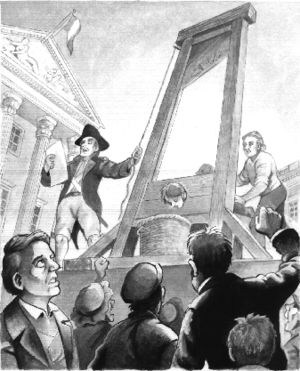
The French Revolution was an interesting time in European history. This event changed the way the country was run, the people within the country, and would even abolish the monarchy. All of he events that happened, were partly, if not all due external factors which shaped the nationalism of the country. There were  main external factors which shaped French Nationalism. Historical, Social, Economic, Geographic, and Political factors were all involved in the French Revolution, and the shaping of the nationalism within the country.

Historical
Not one single event in French history was the cause of the French Revolution. It was a long process which dates back decades. However, one event can often inspire a collective to take action. In France this event was the Storming of the Bastille. The Bastille was a prison in Paris which was home to many political prisoners. On July 14, 1789 many angry people of France attacked and destroyed this building. This is said to be the beginning of the French Revolution, and is a celebrated holiday in France today.

Social
Social factors were one of the factors that directly affected the people of 18th century France. These relationships among the people is what lead to and influenced the revolution itself. There were many challenges for the people of France during this time. Before the revolution, French society was divided into social classes which were often determined at birth. There were three "estates" or classes. The first estate was made largely up of the monarchy, and those closely related to or involved in it. The second estate consisted of aristocrats, clergy and nobleman. These estates were greatly privileged over the third estate. The first and second classes owned land, were exempt from most taxes and often received special treatment from the law. The third estate however, was the unprivileged class. This estate bore almost the entire tax burden, had no say in the government, and were working class. Although the first two estates were those with the most money, the poorest of the estates were subject to the most taxes.

Economic
Due to wars which were largely unsuccessful, and other costly expenses France's economy was in ruins by the 1780's. The decades of war had drained the money, and the country was nearly bankrupt. To solve the problem, the king, Louis XVI decided that the people, including the aristocrats, should pay more taxes. Of course, the French aristocrats rejected this idea. In desperation, Louis XVI called a meeting of the Estates General, a parliament which rarely met. When Louis called the meeting, they had not met in over 175 years. When the members of the Estates General voted on the taxation, members of the third estate set out to create a constitution which made all men equal, and declared themselves the National Assembly. They swore the Tennis Court Oath, saying they were the only group which represented the nation, and would not rest until there was a constitution in place. A few days later was the Storming of the Bastille.News of this spread, and the people of France began to rise up. This is when the revolution began.

Geographic
As Louis XVI was attempting to raise the taxes, France was also experiencing severe weather. The winter the year before the revolution was cold, and piles of snow blocked roads making travel and trade impossible. When the snow melted, it caused flooding in some areas. In the spring, the country was then hit by drought. These conditions caused many grain crops to be destroyed, and created a shortage. Due to these events, the price of flour rose. As bread was a staple food for many during this time, many people could no longer afford to buy it, and went hungry. The king and queen however, were still living lavishly. Many people blamed the queen's spending habits for contributing to the financial crisis. This caused riots in the city, and ultimately, this was one of the main contributors to the revolution.

Political
Before the revolution, there was an absolute monarchy.The king made and enforced all of the laws. He dispensed all the justice and even was able to censor speech and the press. There was a social hierarchy, and this angered many people within the country. However, the revolution created a whole new set of government, law and even a constitution was created. The monarchy was destroyed, the social classes were abolished, and the Declaration of the Rights of Man was created.

Events that took place during the French Revolution helped to shape the France we know today. Many of the events such as the Storming of the Bastille became a symbol which helps to bring the country together. Shortly after, people started wearing red, white and blue to to identify themselves as revolutionaries. These colours would later become the French flag. These events have brought many people together over a sense of pride, and belonging of the things the people of their country have accomplished.

Tuesday, 13 September 2011

Chapter One

Understandings of a Nation.

What is a nation? It's kind of a difficult thing to understand. The first thing that comes to mind when I hear the word "nation" is the word "country". However, I've come to learn that a country is not always a nation. That's not to say that it can't be, but it's not always the case. There has been debate about what a nation actually is. That brings us to the term "nation-state". What is the difference between the two? Well, a nation-state is a country that has physical borders and a single government. Like I said, there are many different ways to understand a nation. So, what are some understandings of a nation? There are many different factors that attribute to what a nation is. There are cultural and ethnic understandings of a nation, religious, geographic, and even political.

One understanding of a nation is linguistic, or the language within a nation. Johann Gottlieb Fichte, a 19th century German philosipher explained that "a common language can create a feeling of belonging so powerful that it inspired a sense of nation". Some believe that language itself is what creates a nation. This is especially true for the people of Quebec. The feeling of belonging to a linguistic nation is very strong among francophones across the country. This is one powerful understanding of a nation.

Another understanding of a nation is ethnic and cultural. Many nations come into being because of shared racial, cultural or linguistic characteristics. For example, the Korean, Japanese and Norwegian nations are based largely on ethnicity, or ethnic nationalism. Ethnic nationalism which is founded on ethnicity, language and culture is how many nations come to be. As opposed to civic nationalism which is founded on the shared values and beliefs of the people within that nation. Many support the idea of basing a nation on common ethnicity because it helps to protect the nations common identity. In extreme cases however, it can lead to racism and intolerance. Culture, or the ways of life that people share can also inspire a sense of nation. Culture and ethnicity are closesly related in creating the feeling of a nation.

Religion and geography are some other understandings of a nation. Religion is a very important understanding of a nation. For example, the Jewish nation has existed for about 3000 years, and for most of this time, they did not have a geographic territory of their own. It wasn't until 1948 that the country of Isreal came into being. This is a prime example of how a shared belief such as religion can form a nation without a geographic territory connected to that religion. Similarly, not all geographic territories are nations. You may have an area in which there are people living, but they may not be part of a nation. The people in this area may create their own sense of culture, values and beliefs to become a nation, just because of the fact that they live in the same geographic area.

Lastly, there is political understanding of a nation. Many nations exist, even without geographic area as mentioned above, but they also exist without government also. Many believe that when deciding if a people are a nation, something to consider is their desire for self-determination, or the power to control one's own affairs. Some beleive that this consideration may even be more important than actual sovereignty, which is the political authority to control one's own affairs.

There are many different ways to understand a nation. Nations come to be in many different ways, this is just one way to try and understand them.