External Factors That Shaped French Nationalism

The French Revolution was an interesting time in European history. This event changed the way the country was run, the people within the country, and would even abolish the monarchy. All of he events that happened, were partly, if not all due external factors which shaped the nationalism of the country. There were main external factors which shaped French Nationalism. Historical, Social, Economic, Geographic, and Political factors were all involved in the French Revolution, and the shaping of the nationalism within the country.
Historical
Not one single event in French history was the cause of the French Revolution. It was a long process which dates back decades. However, one event can often inspire a collective to take action. In France this event was the Storming of the Bastille. The Bastille was a prison in Paris which was home to many political prisoners. On July 14, 1789 many angry people of France attacked and destroyed this building. This is said to be the beginning of the French Revolution, and is a celebrated holiday in France today.
Social
Social factors were one of the factors that directly affected the people of 18th century France. These relationships among the people is what lead to and influenced the revolution itself. There were many challenges for the people of France during this time. Before the revolution, French society was divided into social classes which were often determined at birth. There were three "estates" or classes. The first estate was made largely up of the monarchy, and those closely related to or involved in it. The second estate consisted of aristocrats, clergy and nobleman. These estates were greatly privileged over the third estate. The first and second classes owned land, were exempt from most taxes and often received special treatment from the law. The third estate however, was the unprivileged class. This estate bore almost the entire tax burden, had no say in the government, and were working class. Although the first two estates were those with the most money, the poorest of the estates were subject to the most taxes.
Economic
Due to wars which were largely unsuccessful, and other costly expenses France's economy was in ruins by the 1780's. The decades of war had drained the money, and the country was nearly bankrupt. To solve the problem, the king, Louis XVI decided that the people, including the aristocrats, should pay more taxes. Of course, the French aristocrats rejected this idea. In desperation, Louis XVI called a meeting of the Estates General, a parliament which rarely met. When Louis called the meeting, they had not met in over 175 years. When the members of the Estates General voted on the taxation, members of the third estate set out to create a constitution which made all men equal, and declared themselves the National Assembly. They swore the Tennis Court Oath, saying they were the only group which represented the nation, and would not rest until there was a constitution in place. A few days later was the Storming of the Bastille.News of this spread, and the people of France began to rise up. This is when the revolution began.
As Louis XVI was attempting to raise the taxes, France was also experiencing severe weather. The winter the year before the revolution was cold, and piles of snow blocked roads making travel and trade impossible. When the snow melted, it caused flooding in some areas. In the spring, the country was then hit by drought. These conditions caused many grain crops to be destroyed, and created a shortage. Due to these events, the price of flour rose. As bread was a staple food for many during this time, many people could no longer afford to buy it, and went hungry. The king and queen however, were still living lavishly. Many people blamed the queen's spending habits for contributing to the financial crisis. This caused riots in the city, and ultimately, this was one of the main contributors to the revolution.
Political
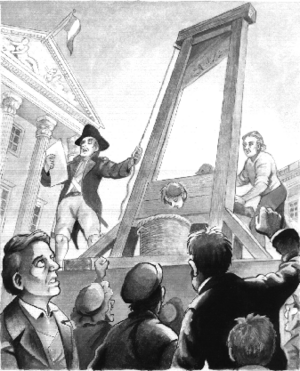
Events that took place during the French Revolution helped to shape the France we know today. Many of the events such as the Storming of the Bastille became a symbol which helps to bring the country together. Shortly after, people started wearing red, white and blue to to identify themselves as revolutionaries. These colours would later become the French flag. These events have brought many people together over a sense of pride, and belonging of the things the people of their country have accomplished.

